Anthropic unveils Claude Opus 4.6, a benchmark for finance
- Maxime Hiez
- Anthropic
- 13 Feb, 2026
Introduction
Artificial intelligence is rapidly growing in the finance industry, but one reality remains : real-world financial analyses are rarely clean, linear, or perfectly defined. They are built on incomplete assumptions, heterogeneous data, cross-validation, and deliverables that must be reviewed, justified, and presented in a presentable way. It is precisely in this area that Claude Opus 4.6, Anthropic’s new flagship model, aims to make a difference. With this version, Anthropic promises not just faster or smarter answers, but an AI designed for financial work as it is actually practiced: complex, iterative, and highly context-dependent.
Specialized AI for finance
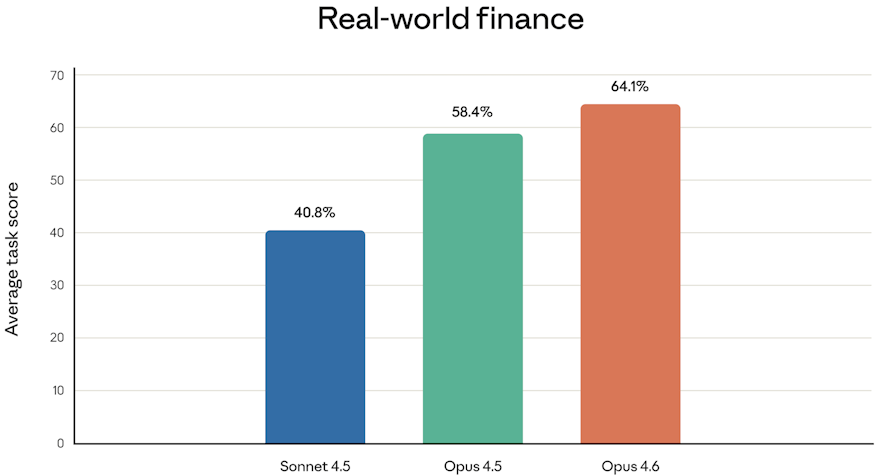
At its core, Opus 4.6 stands out for its significant advancements in financial reasoning and multi-step analysis. In Anthropic’s internal assessments, the model showed an improvement of over 23 points in the real-world finance exercise compared to the previous generation.
Unlike an AI that only responds to simple queries, Claude Opus 4.6 is designed to understand complex documents, analyze unstructured data, and produce results usable in realistic business contexts-whether reports, models, or presentations.
Practical integrations into daily work
To make these capabilities truly usable, Anthropic has integrated Opus 4.6 into tools that analysts use daily :
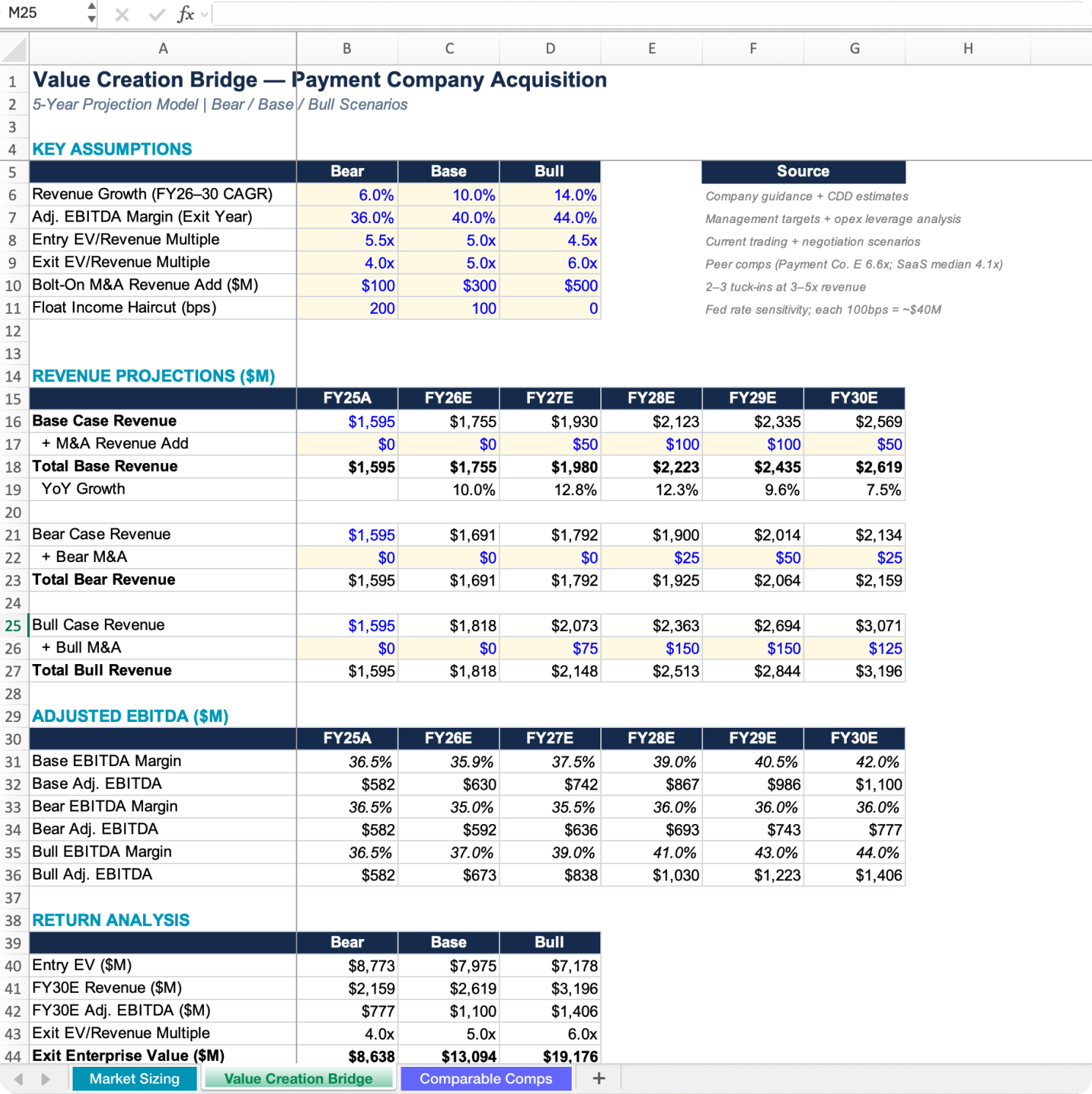
Claude in Excel
Version Opus 4.6 now handles advanced tasks such as :
- Editing pivot tables
- Modifying charts
- Validating data
- Formatting tailored to financial needs
This means that complex models, previously time-consuming to build, can be generated, revised, and automated without tedious copying and pasting between multiple worksheets.
Claude in PowerPoint (beta)
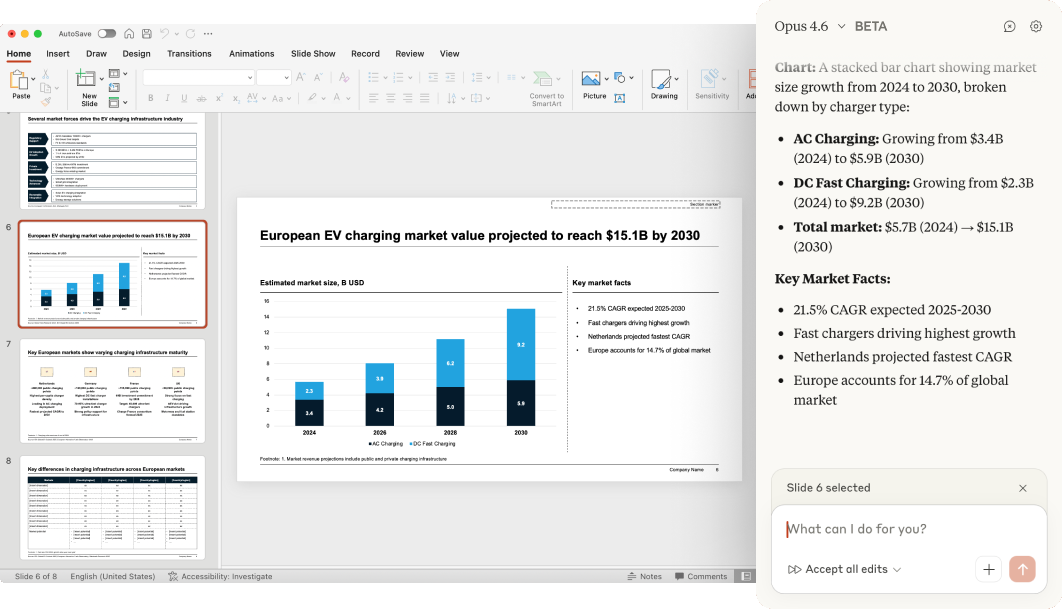
Anthropic also offers a search preview tool for PowerPoint that :
- Reads existing formatting and templates
- Generates complete presentations
- Saves considerable time on reports for clients or investment committees
New Cowork tool
Another key addition is Cowork, a feature that allows Claude to :
- Read
- Edit
- Create files directly in a shared folder
This approach provides finance teams with a form of collaborative oversight, where AI can perform multiple analyses simultaneously while maintaining the required quality standards.
With industry-specific plugins, for accounting entries or variance analyses, for example, Claude becomes a true automated production assistant, not just a response engine.
Performance and productivity gains
What truly distinguishes Opus 4.6 is its measurable impact on complex tasks :
- Financial analyses that used to take weeks can now be completed in minutes to hours
- Well-structured PowerPoint reports are generated automatically
- Excel templates become interactive and less reliant on manual work
Technology partners are even describing this update as a revolution for modern spreadsheet users.
Human use still essential
Despite its advancements, Anthropic reminds us that human intervention remains essential, especially for high-stakes decisions. Claude can automate and accelerate processes, but the critical judgment of analysts remains crucial for validating results.
Conclusion
With Claude Opus 4.6, artificial intelligence does more than just assist, it truly increases the productivity of finance teams by enabling them to manage complex tasks, generate professional deliverables, and focus on strategic analysis rather than repetitive operations. This development confirms a certain market trend : AI is no longer limited to simple conversational assistants but is becoming a tool integrated into business processes, capable of profoundly transforming working methods.
Sources
Did you enjoy this post ? If you have any questions, comments or suggestions, please feel free to send me a message from the contact form.
Don’t forget to follow us and share this post.